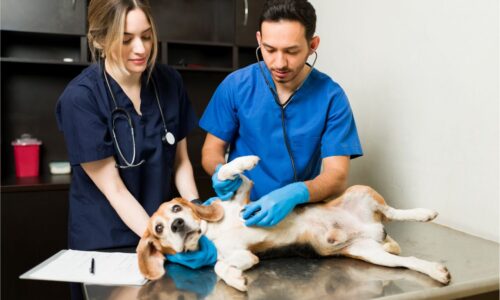

Just like how we do yearly health checkups to monitor health and catch issues in the early phases of the disease process, our pets need annual health checkups as part of their health maintenance. Vital health information, including the information needed to prevent or cure various diseases of domestic pets, can be garnered by veterinarians through the use of veterinary laboratory testing. These veterinary health diagnostic tests provide relevant information critical to the health of our pets, as well as the health of society, by allowing for the early diagnosis and treatment of serious health issues.
The sooner and quicker we can gain insight into the vital extents of our pets’ health problems, the better our ability to solve significant issues. This is perhaps the most important and impressive ability of veterinary diagnostic testing. In this way, diagnostics helps us improve the quality of life our beloved pets. As a pet owner, this is the greatest gift you can give to your pet.
The Importance of Veterinary Health Testing
The possibility of healthy and happy life exists for all pets, as long as veterinary health laboratory diagnostics and testing are utilized as a part of the pets’ annual health checkups. Veterinary health laboratory tests are one of the most important tools for discovering and ultimately preventing life-threatening health issues. In the early stages of a health issue, pets will most likely demonstrate healthy and happy behaviors, masking any underlying serious health threats. Infections, organ failure, parasites, and metabolic disorders are just some of the diseases that can be put into remission with early detection through diagnostic laboratory testing. This is the essence of modern veterinary health services. Veterinary health diagnostics and testing are the most modern and essential health care services to ensure the maintenance of human and animal health. The earlier we start to test, the more we will be able to assist and remedy the various quality of life issues we all face. This is the value of veterinary health diagnostics and testing.
Overall Health Monitoring
Blood testing is commonplace in human medicine, yet blood testing helps in monitoring your pet’s overall health monitoring. Blood tests assist in monitoring:
- Liver health
- Kidney health
- Blood sugar
- Blood cell tests / Hormone levels
Regular blood tests allow your veterinarian to identify trends over time. Regular blood tests may identify an emerging issue before it becomes serious.
Diagnosing Disease
Diagnosing an issue in your pet is challenging. It is further complicated by your pet’s inability to communicate. Veterinary tests become an important factor here. Diagnostic tests provide data that assist a veterinarian in arriving at a diagnosis.
For example, your pet may be lethargic, unmotivated to eat, vomit, or lose weight. Cause of these symptoms can be an infection, an organ problem, oranother nutritional issue. Laboratory tests can identify cause of weight loss.
Treatments and Surgeries
Veterinarians will recommend tests prior to lab diagnostics tests. These tests are to determine whether it is safe to put your pet under anesthesia. These tests determine if your pet is healthy enough for the planned anesthesia or intervention.
Your pets may need surgery, and knowing your pet’s health is vital! They may need blood work to determine whether they have anemia, liver disease, or kidney disease before surgery, as these conditions affect a pet’s level of risk when they do surgery or have anesthesia. Based on these findings, your veterinarian may need to alter their approach to surgery to keep your pet as safe as possible.
Monitoring Chronic Conditions
Your veterinarian may advise you to have your pets blood work done periodically to monitor the effectiveness of their treatment and safety of their medications. Chronic diseases, such as diabetes and kidney disease, can require more effort to manage their overall health. Blood work may be needed to assess whether their treatment is still appropriate. Regular blood work can greatly improve the quality of life of your pet and is important to manage chronic disease.
Preventive Care for a Longer Life
Perhaps the greatest value that veterinary lab tests provide is preventive healthcare. Laboratory diagnostics can reveal health issues before they progress to a critical state. Routine lab tests are likely to be performed the next time your pet has their annual or semi-annual check. These preventable diseases, even when your pet looks healthy, can be found before they progress to critical stages.
Conclusion
It is critical to modern veterinary health care for pets that their diagnostic tests provide an early detection of diseases, monitoring treatment of diseases and assessment of the improvements to the health of your pet. Testing of your pet’s blood, urine, etc. are vital to the health of your pet.